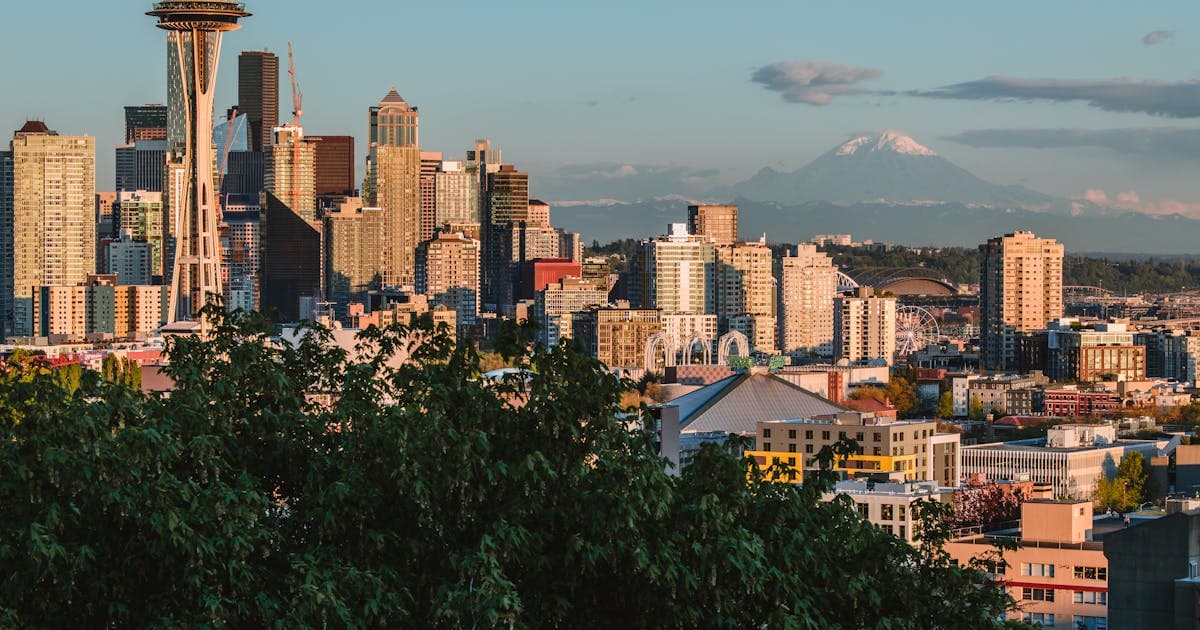
How to Buy a Home in Washington State: The Complete 2026 Guide
Washington State offers one of the most dynamic and scenically spectacular real estate markets in the country — from the tech-driven intensity of the greater Seattle metro to the sunnier, more affordable communities east of the Cascades like Spokane, Tri-Cities, and Yakima. Whether you're a first-time buyer or relocating from out of state, understanding how to buy a home in Washington State in 2026 is the key to navigating this market with confidence.
This guide covers every step of the Washington home buying process, including state-specific programs, inspection considerations, and closing requirements.
The Washington State Housing Market in 2026
Washington State's housing market is strongly influenced by the tech economy, particularly in the greater Seattle-Bellevue-Tacoma corridor, where major employers like Amazon, Microsoft, Boeing, and a rapidly growing startup scene continue to drive demand. East of the Cascades, prices are significantly more affordable and the market moves at a different pace.
Key market facts for Washington State in 2026:
- Median home price statewide: approximately $575,000 — well above the national median, driven largely by the Seattle metro
- Seattle metro (Seattle, Bellevue, Redmond, Kirkland, Renton): Median prices range from $650,000–$1.2M+ in core areas; competitive inventory with strong demand from tech workers
- Eastside suburbs (Bellevue, Issaquah, Sammamish, Bothell): Premium markets; expect $800,000–$1.5M+ for single-family homes
- Tacoma and Pierce County: More accessible pricing at $450,000–$650,000; increasingly popular as a Seattle alternative
- Spokane and Eastern Washington: Significantly more affordable — median prices around $325,000–$400,000 with stronger buyer leverage
- Inventory in 2026 is up meaningfully year over year, giving buyers more selection and more negotiating room than in the 2021–2022 peak years
One important note: Washington passed a Buyer Agency Agreement law requiring buyers to sign a written representation agreement before touring homes with an agent. This formalizes the buyer-agent relationship and is now standard practice statewide.
Step 1: Understand the True Cost of Homeownership in Washington
Washington has no state income tax — a genuine financial benefit for homeowners — but buyers still need to budget carefully for total housing costs:
- Mortgage principal and interest based on purchase price, down payment, and interest rate
- Property taxes — Washington's effective property tax rate averages around 0.87% of assessed value, lower than many states. On a $575,000 home, that's roughly $5,000/year (~$417/month)
- Homeowner's insurance — typically $1,200–$2,000/year depending on location and construction
- Earthquake and flood insurance — Given Washington's seismic activity, earthquake insurance is strongly worth considering; flood insurance may be required in FEMA flood zones
- HOA fees — Common in Seattle condos, newer developments, and planned communities
- PMI — Required on conventional loans with less than 20% down
A general rule: total housing costs should stay below 28%–30% of your gross monthly income.
Step 2: Check Your Credit and Get Pre-Approved
Your credit score determines your loan options and interest rate. In Washington, minimum credit score requirements by loan type are:
- Conventional loan: 620 minimum (740+ for the best rates)
- FHA loan: 580+ for 3.5% down; 500–579 with 10% down
- VA loan: No official minimum, but most Washington lenders prefer 620+
- USDA loan: 640+ (available in eligible rural areas east of the Cascades)
Get fully pre-approved before you start touring homes. In the competitive Seattle metro and Eastside markets, sellers expect a strong pre-approval letter. A pre-approval means the lender has verified your income, assets, employment, and credit — not just run a quick online estimate.
If your credit needs improvement, focus on paying down revolving credit card balances and resolving any errors on your credit report before applying.
Step 3: Explore Washington State First-Time Homebuyer Programs
Washington offers meaningful assistance programs that many buyers don't know about. Don't assume you need to come up with a full down payment on your own.
Washington State Housing Finance Commission (WSHFC)
The WSHFC administers Washington's primary homebuyer assistance programs. Key options include:
- Home Advantage Program: Offers a competitive 30-year fixed-rate mortgage paired with up to 4% of the loan amount in down payment assistance (as a second mortgage at 0% interest, deferred for the life of the loan)
- Opportunity Program: Targeted to buyers with lower incomes and lower home prices; offers below-market mortgage rates paired with down payment assistance
- HomeChoice Program: Down payment assistance specifically for buyers with disabilities or those purchasing a home for a family member with a disability
To qualify for most WSHFC programs: - Complete a free online homebuyer education course (required) - Meet income limits (typically up to $145,000–$180,000+ depending on area and program) - Purchase within WSHFC's purchase price limits (varies by county; higher limits in King, Pierce, and Snohomish counties) - Occupy the home as your primary residence
Federal Programs Available in Washington
- USDA loans: Available in many Eastern Washington communities and rural Western Washington areas — 100% financing with no down payment required
- VA loans: Available to eligible veterans, active-duty service members, and surviving spouses — no down payment, no PMI, competitive rates
Step 4: Work With a Washington Buyer's Agent
Washington's real estate markets vary dramatically by region — a buyer's agent with specific knowledge of your target market is one of your most valuable assets. Look for an agent who:
- Has recent closed transactions (ideally 12+ per year) in your specific target area
- Can clearly explain current inventory levels, average days on market, and local price trends
- Is fluent in the Washington purchase and sale agreement and local customs
- Understands the signed Buyer Agency Agreement requirement and can walk you through it
Washington is an escrow state — closings are typically handled by an escrow officer (not a real estate attorney), and title companies facilitate the closing process. Your agent should be comfortable coordinating with the escrow and title teams.
Step 5: Search for Homes and Understand Local Market Dynamics
Washington MLS listings populate Zillow, Redfin (which was founded in Seattle), Realtor.com, and your agent's search portal. Set up automatic alerts for new listings — desirable homes in the Seattle metro and Eastside can receive multiple offers within days of listing.
Washington markets by general price range (2026 estimates):
- Under $400,000: Spokane, Tri-Cities (Kennewick, Pasco, Richland), Yakima, Wenatchee, Moses Lake
- $400,000–$600,000: Tacoma, Olympia, Bremerton, Bellingham, some Pierce and Thurston County suburbs
- $600,000–$900,000: South Snohomish County (Edmonds, Lynnwood, Marysville), outer King County (Auburn, Kent, Federal Way)
- $900,000–$1.5M+: Seattle neighborhoods, Bellevue, Kirkland, Redmond, Sammamish, Issaquah, Mercer Island
Step 6: Make an Offer
When you find the right home, your agent will prepare a Washington State Purchase and Sale Agreement with the following key terms:
- Purchase price
- Earnest money deposit — typically 1%–3% of the purchase price in the Seattle metro; often lower in Eastern Washington
- Financing contingency — protects you if your mortgage falls through
- Inspection contingency — allows you to negotiate repairs or exit the contract based on inspection findings
- Appraisal contingency — protects you if the home appraises below the purchase price
- Closing date — typically 20–45 days from mutual acceptance, depending on financing type
In competitive Seattle-area markets, sellers frequently receive multiple offers. Your agent can advise on escalation clauses, covering the appraisal gap, and other strategies. In Eastern Washington and less competitive markets, buyers typically have more room to negotiate.
Step 7: Get a Thorough Home Inspection
Schedule your inspection promptly after mutual acceptance. Washington-specific inspection concerns include:
- Seismic/earthquake considerations: Washington is an active seismic zone. Look for cripple wall bracing, soft-story construction in older buildings, chimney integrity, and foundation anchoring
- Moisture and mold: Western Washington's wet climate makes roof integrity, attic ventilation, crawl space moisture, and window seals especially important
- Radon testing: While less critical than in some interior states, radon can be present — testing is inexpensive and worthwhile
- Sewer scope: Recommended for homes over 30 years old, particularly in Seattle and older Puget Sound communities
- Environmental hazards: Older Seattle-area homes may contain asbestos or lead paint; factor remediation costs into your offer
Washington sellers are required to complete a Seller Disclosure Statement (Form 17) disclosing known material defects. Review this carefully alongside your inspection report.
Step 8: Understand Washington State Closing Costs
Washington buyers should budget 2%–4% of the purchase price in closing costs. Key line items include:
- Lender fees — origination, underwriting, appraisal (typically $1,500–$3,500)
- Title insurance and escrow fees — owner's and lender's policies; escrow company fees (typically $2,000–$4,500 depending on purchase price)
- Washington State Excise Tax (REET): Washington charges a real estate excise tax on property sales, paid by the seller — buyers are not responsible for this tax
- Recording fees — typically $200–$400
- Prepaid items — first year's homeowner's insurance, property tax escrows, and prepaid mortgage interest
- HOA transfer fees (if applicable)
Note: Washington does not have a state income tax, which is a notable long-term financial benefit of homeownership in the state.
Step 9: Close on Your Washington Home
Washington closings are conducted through an escrow company or title company. The closing process typically involves signing documents a day or two before the actual recording date. On closing day (or signing day):
- Bring a government-issued photo ID
- Your escrow officer will provide exact wire transfer instructions for your closing funds — confirm these figures directly with the escrow company (never via email to avoid wire fraud)
- Your signed homeowner's insurance binder must be in place before closing
Once the deed records with the county, the home is officially yours. Your agent will arrange key delivery — in Washington, this typically happens the day the transaction records.
Washington State Home Buying Fast Facts
| Median home price (statewide) | ~$575,000 |
| Average effective property tax rate | ~0.87% |
| State income tax | None |
| Attorney review period | No (escrow state) |
| WSHFC down payment assistance | Up to 4% of loan amount |
| Buyer Agency Agreement required? | Yes |
| Seismic risk? | Yes — consider earthquake insurance |
| Typical time from offer to close | 20–45 days |
The Bottom Line
Buying a home in Washington State in 2026 requires solid preparation — especially in the Seattle metro, where competition remains meaningful and prices are well above the national average. That said, inventory has improved significantly from the peak years, giving buyers more options and more negotiating leverage than they've had in several years.
Take advantage of WSHFC down payment assistance programs, which can meaningfully reduce upfront costs. Get fully pre-approved before you tour homes, sign your Buyer Agency Agreement upfront, and don't skip the home inspection — Washington's seismic activity and wet western climate make a thorough inspection especially important.
Whether you're buying in a Seattle neighborhood, a Tacoma suburb, or a sun-drenched Eastern Washington community, the right preparation will help you close with confidence.